If you are shopping for a golf course home in Trophy Club, you are probably looking for more than a house with a nearby fairway. You want the right view, the right level of privacy, and a layout that actually supports the lifestyle you have in mind. The good news is that Trophy Club was built with golf woven into daily life, and knowing what matters most can help you buy with more confidence. Let’s dive in.
Why Trophy Club draws golf buyers
Trophy Club has a strong golf identity that shapes how buyers see the market. The town describes itself as Texas’ first master-planned community, with more than 1,000 acres of parks and 36 holes of golf winding through neighborhoods. That means golf is not just an amenity here. It is part of the setting, the streetscape, and many of the views buyers notice first.
Location also adds to the appeal. Trophy Club sits along SH 114 with convenient access to Southlake, Westlake, Roanoke, DFW Airport, and Alliance Airport. For buyers who want a golf-focused lifestyle without giving up regional convenience, that combination can be a major advantage.
At the center of that lifestyle is Trophy Club Country Club. The club offers two 18-hole courses, the Hogan Course and the Whitworth Course, along with dining, tennis, pickleball, fitness, lessons, an indoor golf simulator, and TrackMan-supported fitting. For many buyers, that broader mix helps define what living in Trophy Club can feel like day to day.
Golf view matters most
For many golf course buyers, the first question is simple: Does the home have a true golf view, or is it just near the course? That difference matters. A home that backs or looks onto a fairway, green corridor, or open golf space often creates a stronger first impression than one that only shares the same neighborhood.
Buyer-interest research supports that. Realtor.com found that golf course view and community golf both ranked among the top 25 most-viewed home features in its analysis. The same research also found that hobby-supporting features drew 37.2% more views than the typical U.S. home in the sample.
In Trophy Club, a strong golf view often shows up through wide rear windows, open sightlines from the main living area, and outdoor spaces that frame the course rather than block it. When you tour a home, pay attention to what you can actually see from the kitchen, living room, and primary suite. Those are often the places where the value of the setting becomes most obvious.
Backyard privacy still matters
A golf view is attractive, but most buyers do not want to feel exposed. That is why privacy and openness need to feel balanced. A home can overlook the course and still provide a comfortable sense of separation through lot placement, landscaping, patio design, and the angle of the rear façade.
Realtor.com research also points to buyer interest in privacy, big lots, and usable backyards. In practical terms, that means buyers are often looking closely at how the outdoor space lives, not just what it overlooks. A fairway backdrop is appealing, but a backyard that feels too close to cart paths or too visible from surrounding homes may land differently in person than it does in listing photos.
In Trophy Club, this is especially important because course views are part of the local identity. Buyers tend to compare one golf-facing home against another. The homes that stand out are usually the ones that deliver both a strong visual connection to the course and a backyard that still feels calm and functional.
Outdoor living should feel usable
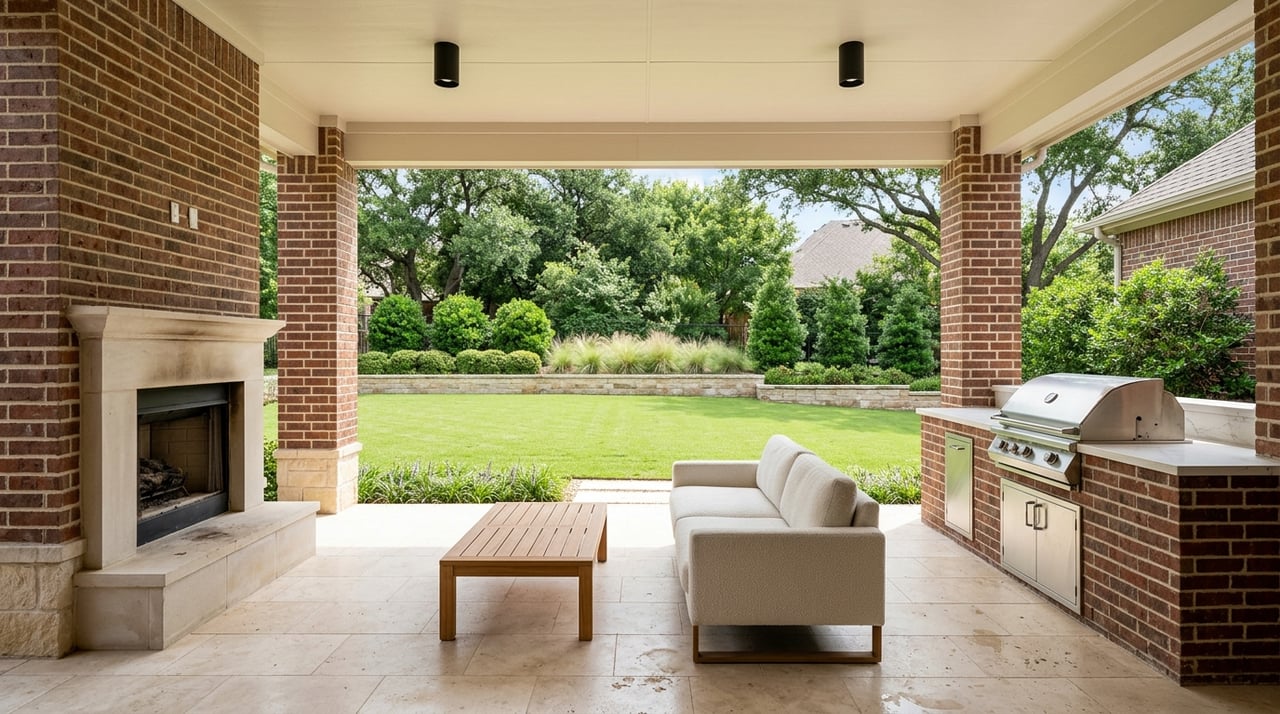
Golf buyers are often drawn to homes where the patio or porch feels like a real extension of the house. That does not mean it has to be oversized or elaborate. It does mean the space should feel easy to use for morning coffee, casual dinners, or relaxing after a round.
NAR reports that functional exterior living spaces are becoming more important, and that buyers are paying attention to larger windows and views of greenery. In a golf-oriented community like Trophy Club, that trend carries extra weight because outdoor living and golf views naturally work together.
As you evaluate a home, look for:
- Covered patios or porches with enough depth for seating
- Easy flow from the kitchen or living area to the backyard
- Window placement that keeps the course visible from inside
- Landscaping that feels tidy without blocking the view
- Outdoor areas that feel intentional, not leftover
When these features come together, the home tends to feel more aligned with what golf-lifestyle buyers expect.
Interior layout shapes the experience
The best Trophy Club golf homes do not rely on the lot alone. The interior layout should help you enjoy the setting throughout the day. That often means open or flexible living spaces, larger kitchen islands, and clear sightlines that keep the windows and views working as part of the home’s design.
NAR trend coverage notes that buyers are paying attention to flexible living spaces and kitchens that function as a central gathering point. That matters in golf homes because buyers often want spaces that work equally well for quiet daily routines and casual entertaining. If the back of the home opens well to the patio and view, the house can feel larger and more connected.
A good floor plan also helps the home appeal beyond avid golfers. In Trophy Club, that can matter because the buyer pool may include move-up buyers and relocators who like the setting and convenience even if golf is not the only priority.
What buyers notice first online
Before buyers ever walk through the front door, they usually form an opinion from the listing media. According to NAR’s 2025 Profile of Home Staging, 73% of buyers’ agents said photos were much more or more important to clients. That was higher than physical staging, video, or virtual tours.
For a Trophy Club golf home, that means the visuals need to lead with the strongest lifestyle features. The most effective presentation usually highlights the rear windows, the view corridor, patio depth, and the transition between indoor and outdoor spaces. Buyers want to understand not just the rooms, but how the home lives on the lot.
This is one reason strategic marketing matters so much in this segment. A golf course property often competes on feel, setting, and presentation as much as square footage. When those strengths are captured clearly, the home can attract better-aligned interest from the start.
Staging priorities for Trophy Club golf homes
If you are selling, staging should support the lifestyle buyers expect. NAR’s 2025 Profile of Home Staging found that 83% of buyers’ agents said staging makes it easier for buyers to visualize a property as a future home. The same report identified the living room, primary bedroom, and kitchen as the most important rooms to stage.
That lines up well with what golf-home buyers tend to focus on in Trophy Club. These are often the rooms where the view, light, and flow matter most. If the furniture placement blocks windows or makes the space feel smaller, buyers may miss the very features that should be doing the heavy lifting.
NAR also reported that sellers’ agents most often staged:
- Living room: 91%
- Primary bedroom: 83%
- Dining room: 69%
- Kitchen: 68%
- Outdoor or yard space: 31%
In a golf-course setting, outdoor staging may deserve more attention than usual. Even simple seating, clean lines, and uncluttered surfaces can help buyers picture themselves using the patio and enjoying the view.
Non-golf features widen buyer appeal
Golf may be the headline, but it is not the whole story in Trophy Club. The town also highlights more than 1,000 acres of parks, and Trophy Club Park includes boating, kayaking, disc golf, fishing, hiking, and other outdoor activities. For some buyers, that wider amenity mix strengthens the appeal of living here.
Practical convenience matters too. Trophy Club’s access to SH 114 and proximity to major employment and travel corridors can be meaningful for relocators and move-up buyers. A home that offers golf views plus easy regional access may appeal to a broader group than a golf-centered description alone suggests.
School access can also be part of the conversation in a factual, practical way. Northwest ISD includes Trophy Club, with Samuel Beck Elementary, Lakeview Elementary, and Medlin Middle School located in Trophy Club, and Byron Nelson High School serving the Trophy Club and Roanoke area. For many buyers, that adds another layer of everyday functionality to the golf lifestyle.
What this means for buyers and sellers
If you are buying in Trophy Club, it helps to look past the label of “golf course home” and focus on the details that shape daily use. The strongest properties usually combine a real view, comfortable privacy, usable outdoor living, and an interior layout that keeps the setting front and center.
If you are selling, the goal is to present those features clearly from the first photo to the final showing. In a market like Trophy Club, buyers often respond to homes that tell a complete lifestyle story, not just a list of upgrades. That is where pricing strategy, staging, and high-quality visual marketing can make a real difference.
Whether you are preparing to list or trying to narrow your home search, understanding what golf course buyers actually value can help you make smarter decisions. If you want tailored guidance on buying or selling in Trophy Club, connect with The Kinn Team for a local strategy built around presentation, pricing, and results.
FAQs
What do Trophy Club golf home buyers value most?
- Buyers often focus on true golf views, backyard privacy, usable outdoor living space, and layouts that keep the course visible from main living areas.
What is the difference between a golf view and golf proximity in Trophy Club?
- A golf view means the home has a direct visual connection to the course, while golf proximity usually means the home is near the course but may not actually overlook it.
Which rooms matter most when staging a Trophy Club golf home?
- NAR data points to the living room, primary bedroom, and kitchen as the top staging priorities because buyers often focus on those spaces first.
Do outdoor spaces matter when selling a golf course home in Trophy Club?
- Yes. Buyers tend to notice whether the patio, porch, and backyard feel functional, comfortable, and connected to the home’s interior.
What amenities beyond golf attract buyers to Trophy Club homes?
- Buyers may also be drawn to Trophy Club’s parks, outdoor recreation options, SH 114 access, and proximity to Southlake, Westlake, Roanoke, DFW Airport, and Alliance Airport.
Which schools serve Trophy Club, Texas?
- Northwest ISD serves Trophy Club, including Samuel Beck Elementary, Lakeview Elementary, Medlin Middle School, and Byron Nelson High School for the Trophy Club and Roanoke area.