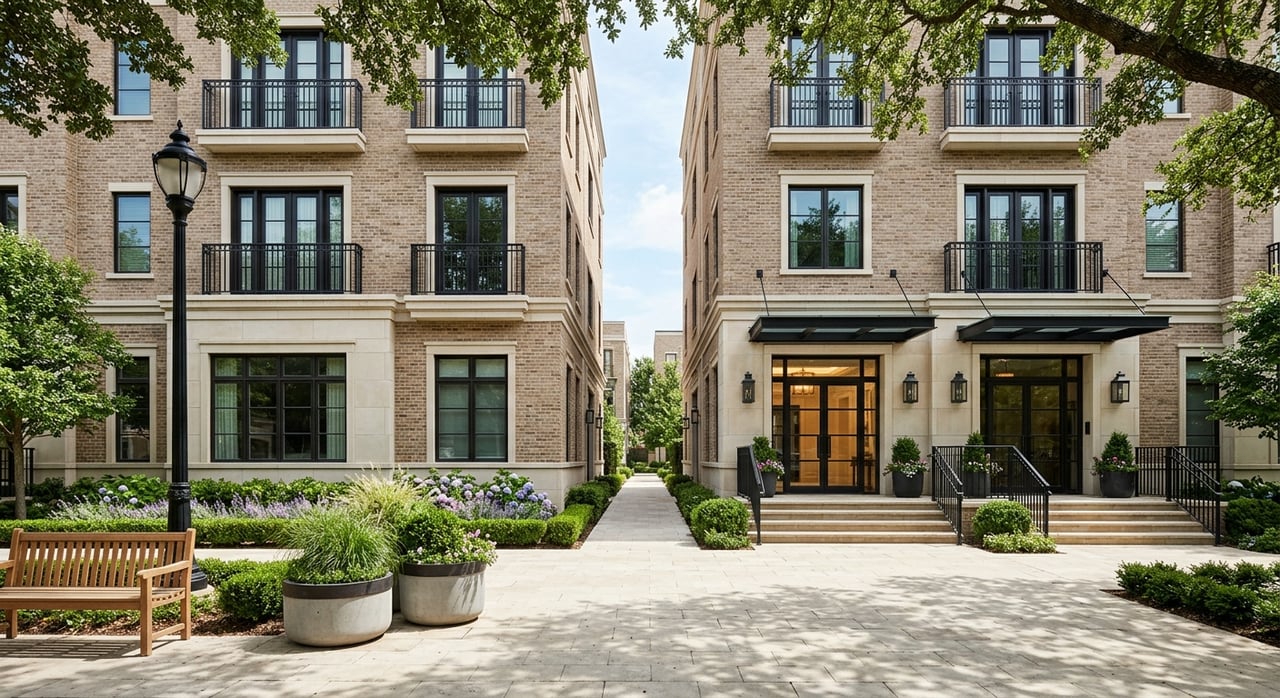
What does urban Dallas living really look like when you are choosing between a condo, townhome, and single-family home? If you are trying to balance budget, lifestyle, commute, and upkeep, the answer is not always obvious. The good news is that Dallas gives you real options across a wide range of neighborhoods and price points, and understanding the tradeoffs can help you buy with more confidence. Let’s dive in.
Urban Dallas home types at a glance
If you want a quick snapshot, the Dallas-Plano-Irving market data shows a clear pattern. In April 2025, median sale prices were $302,000 for condos, $404,000 for townhomes, and $430,000 for single-family homes, according to the NTREIS Monthly MLS Summary Report. That same report showed 7.6 months of inventory for condos, 5.9 for townhomes, and 4.3 for single-family homes.
In simple terms, condos tend to be the most affordable entry point, townhomes often sit in the middle, and detached homes usually require the highest budget. That does not make one option better than another. It just means each property type fits a different set of priorities.
The broader market baseline comes from Texas Real Estate Research Center housing activity data, which tracks MLS-based sales across single-family, condo, and townhouse properties in the Dallas-Plano-Irving metropolitan division. For buyers who want to compare options in the same market, that gives you a useful apples-to-apples starting point.
Condo living in Dallas
A condo can make sense if you want an urban footprint with less exterior maintenance. This option often appeals to buyers who value shared amenities, a lock-and-leave lifestyle, and a location close to dining, entertainment, or transit. If your goal is to spend less time on upkeep and more time enjoying the city, a condo may be worth a serious look.
There is a cost tradeoff, though. The Consumer Financial Protection Bureau notes that condo and HOA dues are usually paid directly to the association, not your mortgage servicer, and those dues can range from a few hundred dollars a month to more than $1,000. Those fees generally help cover common-area upkeep, and condo associations may also carry master insurance for common areas.
That means the lower purchase price does not automatically equal the lowest monthly cost. Before you buy, you will want to understand exactly what the association covers, how stable the dues are, and whether the building rules fit your lifestyle.
Who condos often fit best
Condos can be a strong fit if you:
- Want a lower entry price in urban Dallas
- Prefer less exterior maintenance
- Like the idea of shared amenities
- Are comfortable with shared walls and association rules
- Want a more compact home near neighborhood activity
Townhome living in Dallas
Townhomes often give you a middle-ground option. You may get more space and privacy than a condo, but less upkeep than a detached home. For many buyers, that balance is exactly the appeal.
The April 2025 market data supports that middle position. Townhomes posted a median sale price of $404,000, with 5.9 months of inventory and a median of 65 days on market, based on the NTREIS report. If you want a property type that can bridge the gap between condo convenience and single-family space, townhomes deserve a close comparison.
Some townhomes include HOA dues, while others may have different maintenance arrangements. That is why it helps to compare not only the monthly payment, but also parking, outdoor space, storage, and what exterior maintenance you still handle yourself.
Who townhomes often fit best
Townhomes may fit you well if you:
- Want more room than a typical condo
- Prefer some separation from neighbors without full detached-home upkeep
- Need a more flexible layout for work, guests, or hobbies
- Want a purchase price that may land between a condo and single-family home
- Value an urban or close-in location with a bit more private space
Single-family living in Dallas
If privacy, control, and room to grow are high on your list, a single-family home may be the better match. Detached homes generally give you the most freedom over your property and often provide more private outdoor space. They can also work well if you plan to stay longer and want your home to adapt with your needs.
That extra control comes with more responsibility. The CFPB’s homebuying worksheet uses a rule of thumb of about 1% of the home price per year for maintenance, and buyers should budget separately for taxes, insurance, utilities, maintenance, and improvements. In other words, the purchase price is only part of the financial picture.
There is also a neighborhood context to keep in mind. In some Dallas single-family areas, the city uses Neighborhood Stabilization Overlays to preserve established built character. If you are considering a detached home in a close-in neighborhood, it is smart to understand any local property rules that may affect future changes.
Who single-family homes often fit best
Single-family homes are often a strong fit if you:
- Want the most privacy
- Need more storage or outdoor space
- Prefer more control over your property
- Plan to stay put for several years
- Are comfortable budgeting for higher maintenance responsibility
Comparing the true monthly cost
The right choice is not just about sale price. It is about your full monthly carrying cost and how predictable that cost feels to you.
The CFPB says closing costs typically run about 2% to 5% of the purchase price, and that is before you factor in property taxes, insurance, utilities, maintenance, and any HOA dues. If you are deciding between home types, this is where a side-by-side budget can bring a lot of clarity.
Property taxes matter in Dallas. The Dallas County tax rate page lists separate rates for different taxing entities. For 2025, the Dallas County rate is $0.2155 per $100, and the City of Dallas rate is $0.6988 per $100. Taxes are based on assessed value, which can differ from your purchase price.
Here is a practical way to compare your options:
- Mortgage payment
- Estimated property taxes
- Homeowners insurance
- HOA or condo dues, if any
- Utilities
- Maintenance reserve
- Parking or storage costs, if applicable
When you look at the full number, a condo with dues may cost closer to a townhome than you expected. Or a single-family home with no HOA may still stretch your budget because of upkeep and taxes. The key is to compare complete monthly ownership costs, not just list prices.
Matching your home to your Dallas lifestyle
Your daily routine matters just as much as your budget. Dallas offers a range of urban neighborhoods, and your best fit may depend on whether you prioritize walkability, dining, nightlife, transit access, or a quieter residential feel.
Visit Dallas neighborhood guides highlight major urban areas including Downtown, Uptown, Oak Lawn, Deep Ellum, Bishop Arts District, Lower Greenville, Knox/Henderson, Harwood, the Design District, and Cedars/Southside. Those areas each offer a different experience, from Downtown’s arts, green space, dining, and shopping to Uptown’s walkable environment.
If a more car-light lifestyle matters to you, transit can shape your search. The DART downtown system map shows M-Line trolley service around Uptown and the Arts District, while the Dallas Streetcar connects EBJ Union Station and the Bishop Arts District with a 2.45-mile route and six stops. For some buyers, that makes close-in condo or townhome living especially appealing.
Urban Dallas lifestyle questions to ask
Before you narrow your search, think through:
- How long is your weekday commute?
- Do you want walkable access to dining or entertainment?
- How important are parking and storage?
- Do you want private outdoor space?
- Are you comfortable with shared walls?
- How long do you expect to stay in the home?
These questions can help you move beyond broad labels and focus on how the property will function in your real life.
A simple decision checklist
When buyers feel stuck between these three options, the answer usually becomes clearer when you compare the basics in one place. Start with the checklist below and be honest about what matters most right now, not just what sounds good in theory.
- Your monthly budget after mortgage, taxes, HOA, and maintenance
- Your preferred commute and transit access
- Your need for parking, storage, and guest space
- Your tolerance for upkeep and repairs
- What the HOA or condo association actually covers
- How long you expect to stay in the property
- Whether you may qualify for a residence homestead exemption
On that last point, the CFPB worksheet includes homestead exemption as a useful item to check, and Dallas CAD says an owner qualifies only if they own and occupy the home as their principal residence on the application date. That is one more reason to look at the details early instead of making assumptions late in the process.
Which Dallas home type is right for you?
If you want the most budget-friendly entry point and the least exterior maintenance, a condo may be the best fit. If you want a middle option with more space and a more private feel, a townhome may be the smarter move. If your focus is privacy, flexibility, and long-term control, a single-family home may give you the best overall match.
The right answer depends on how you live, what you want to spend each month, and which parts of Dallas feel most convenient for your routine. A smart home search starts by matching the numbers to the lifestyle, not by chasing a property type just because it seems popular.
If you are weighing urban Dallas options and want clear, practical guidance, The Kinn Team can help you compare neighborhoods, monthly costs, and property types so you can buy with confidence.
FAQs
What is the most affordable urban home type in Dallas?
- Based on April 2025 Dallas-Plano-Irving MLS data, condos had the lowest median sale price at $302,000, compared with $404,000 for townhomes and $430,000 for single-family homes.
What should Dallas buyers know about condo and HOA fees?
- Condo and HOA dues are usually paid directly to the association, not the mortgage servicer, and they can range from a few hundred dollars a month to more than $1,000 depending on the property and what the association covers.
How do Dallas townhomes compare with condos and single-family homes?
- Townhomes often offer a middle-ground option, with more space and privacy than a condo and less upkeep than a detached single-family home.
What extra costs should Dallas single-family home buyers budget for?
- In addition to the mortgage, you should budget for property taxes, insurance, utilities, maintenance, and future improvements, with the CFPB worksheet using about 1% of the home price per year as a maintenance rule of thumb.
Which Dallas neighborhoods are often considered urban living areas?
- Visit Dallas highlights Downtown, Uptown, Oak Lawn, Deep Ellum, Bishop Arts District, Lower Greenville, Knox/Henderson, Harwood, the Design District, and Cedars/Southside as major urban neighborhoods.
How can transit affect an urban Dallas home search?
- Buyers who want a more car-light lifestyle may want to focus on areas near the M-Line trolley, the Arts District, Uptown, or the Dallas Streetcar route between EBJ Union Station and Bishop Arts District.