Wondering whether you should buy your next home before selling your current one in Fort Worth? You are not alone. For many move-up buyers, this is the biggest stress point in the whole process because timing, cash flow, and risk all collide at once. The good news is that in today’s Fort Worth market, you have options, and the right choice usually comes down to your finances, your timeline, and how much overlap you can comfortably handle. Let’s dive in.
Fort Worth Market Snapshot
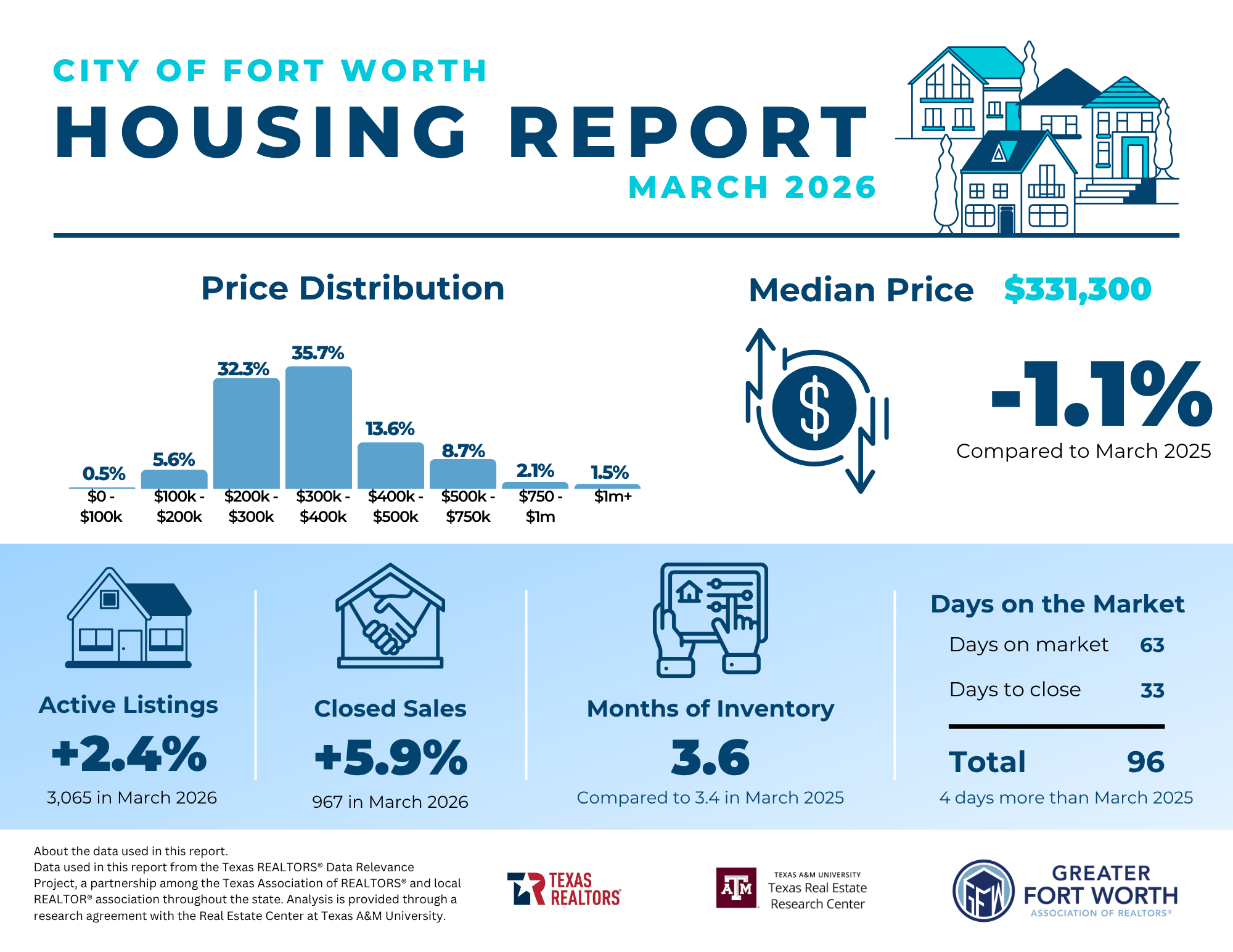
The local market is much calmer than it was during the peak frenzy of 2021 and 2022, but it is not fully balanced yet. According to the Greater Fort Worth Association of REALTORS March 2026 market infographic, Fort Worth had a median home price of $331,300, 3.6 months of inventory, 63 days on market, and 96 days total from list to close.
That matters because inventory is more available than it used to be, but the market is still below the six-month balance point referenced by GFWAR. In nearby areas, Tarrant County posted 3.3 months of inventory and 60 days on market, while Arlington moved a bit faster with 3.0 months of inventory and 51 days on market. In plain terms, your current home may still sell in a reasonable window if it is priced well, but the right replacement home can still move quickly.
Sell First Is Usually Safer
For most Fort Worth homeowners, selling first is the lower-risk path. The CFPB advises that if you want to move, you normally try to sell your current home before buying another one.
Why is that the safer default? Because once your current home sells, you know how much equity you are working with for your down payment, closing costs, and next monthly payment. That clarity can help you avoid stretching your budget at a time when mortgage rates still matter a lot.
As of April 16, 2026, Freddie Mac reported a 6.30% average rate for a 30-year fixed mortgage and 5.65% for a 15-year fixed mortgage. With rates at that level, carrying two housing payments at once can feel expensive very quickly.
Why selling first works well
Selling first often makes sense if:
- You need your current equity for the next down payment
- You want a clear budget before shopping
- You do not want to risk two mortgage payments at once
- You prefer a more conservative financial plan
The CFPB also notes that affordability depends on your monthly payment, down payment, loan type, and interest rate. If your next move depends heavily on the proceeds from your current sale, selling first usually gives you the cleanest and most predictable path forward.
The Trade-Off of Selling First
The biggest downside of selling first is logistics. Once your home sells, you may need to line up temporary housing, negotiate your timing carefully, or find a way to stay in your home a little longer after closing.
This is where contract strategy matters. The National Association of REALTORS contingency guide explains that a rent-back clause can allow you to remain in the home for a negotiated period after closing. It also explains that a home-close contingency can give you time to close on your current home before purchasing the next one.
For many Fort Worth move-up buyers, this approach reduces financial stress even if it creates a little more planning work. You may have to coordinate more moving pieces, but you are doing it with better budget visibility.
When Buying First Can Make Sense
Buying first is not wrong. It just works best when you have the financial strength to support it.
According to the CFPB’s homebuying guidance, lenders look at your income, assets, employment, savings, monthly debts, and credit when deciding whether you can repay a loan. That means buying first is usually more realistic if you have strong equity, healthy savings, and lender approval that accounts for the full picture.
Buying first may fit if:
- You have substantial equity and cash reserves
- You can handle some overlap in housing costs
- You need to secure a specific replacement home
- You want to avoid a temporary rental or double move
- Your lender is comfortable with your debt and asset profile
In a market like Fort Worth, this can be helpful if the next home is in a pocket where well-priced listings still move faster than the overall market average. Even though the broader market has slowed, the best-fit home for your needs may not wait.
The Risks of Buying First
The biggest risk is simple: you could end up paying for two homes at once.
The CFPB reminds buyers that homeownership costs include more than just the mortgage. You also need to factor in repairs, property taxes, insurance, HOA dues, and other ongoing expenses. On top of that, closing costs typically run 2% to 5% of the purchase price, and mortgage insurance may apply if your down payment is under 20%.
If your current home takes longer to sell than expected, that overlap period can get uncomfortable fast. Even in a steadier Fort Worth market, 63 days on market and 96 days from list to close is not instant.
Equity tools can help, but they add risk
Some homeowners explore a HELOC, home equity loan, or bridge-style financing to buy before selling. These can be useful tools, but they should be approached carefully.
The CFPB explains that a home equity loan is a lump-sum loan and a HELOC is revolving credit, and both are second mortgages if you already have a first mortgage. If you cannot repay them, the lender could foreclose. That does not mean these tools are off the table, but it does mean they should be part of a thoughtful plan with your lender.
Contract Tools That Can Protect You
Whether you buy first or sell first, the right contract structure can reduce risk.
The CFPB recommends making an offer contingent on financing and a satisfactory inspection. NAR also lists financing, appraisal, inspection, title, homeowners insurance, home sale, and home close contingencies as common tools that can protect buyers and sellers.
Key contingencies to know
- Financing contingency: protects you if your loan approval falls through
- Inspection contingency: gives you options if the property condition raises concerns
- Home-sale contingency: lets your purchase depend on selling your current home
- Home-close contingency: gives you time to close on your current home before buying
These clauses can be helpful, but they can also make your offer less competitive. NAR notes that sellers may continue to show the property while your contingent offer is in place, and a kick-out clause can let them accept a better non-contingent offer if one comes along.
That is why contingent offers require strategy. In some Fort Worth submarkets, the broader numbers look balanced, but the most appealing homes can still attract fast interest.
How to Decide in Fort Worth
The right answer is usually less about the market headline and more about your personal risk tolerance. A good way to frame the decision is this: are you more concerned about financial exposure, or are you more concerned about missing the right next home?
If your equity from your current home is essential to the move, selling first is usually the better route. If you have strong reserves, flexible financing, and a clear exit plan, buying first may be workable.
A simple decision guide
| Your situation | Usually the better fit |
|---|---|
| You need sale proceeds for the next down payment | Sell first |
| You want the lowest financial risk | Sell first |
| You can carry overlap comfortably | Buy first may work |
| You need a specific replacement home | Buy first may work |
| You want to avoid temporary housing | Buy first may work |
| You prefer maximum budget clarity | Sell first |
Questions to Ask Before You Choose
Before you commit to either path, it helps to answer a few practical questions:
- How much equity do you actually have available after selling costs?
- Could you comfortably handle two housing payments for two or three months?
- How quickly is your likely price range moving in your part of Fort Worth?
- Would a rent-back or home-close contingency reduce your stress?
- Are you comfortable making a contingent offer that may be less competitive?
- Have you reviewed your full monthly budget, not just your target purchase price?
The CFPB encourages buyers to look at the full housing payment, including taxes, insurance, maintenance, utilities, and HOA dues. That broader view often makes the right answer clearer.
A Smart Next Step
In today’s Fort Worth market, selling first is still the safer default for most move-up households. But buying first can work if you have enough equity, savings, and lender support to manage the overlap without putting pressure on your finances.
The key is having a plan before you list or start writing offers. If you want help mapping out the timing, pricing, and contract strategy for your next move in Fort Worth, connect with The Kinn Team. Their team brings local experience, data-backed pricing, and full-service support to help you move with more confidence.
FAQs
How long does it take to sell a home in Fort Worth right now?
- According to the GFWAR March 2026 market infographic, homes in Fort Worth averaged 63 days on market and about 96 days total from list to close.
What is a home-sale contingency when buying in Fort Worth?
- A home-sale contingency means your offer depends on selling your current home first, and the NAR contingency guide explains how that can be written into a contract.
Can I use a HELOC or home equity loan to buy before selling?
- Yes, some homeowners consider those options, but the CFPB explains that both are second mortgages and come with repayment risk.
What if the inspection finds a problem in the home I want to buy?
- The CFPB recommends using an inspection contingency so you have protection if the property condition is not acceptable.
Who should I talk to before deciding whether to buy first or sell first?
- Freddie Mac notes that your lender, financial advisor, and/or a housing counselor can help you evaluate the best timing and financing approach for your situation.